Last Updated on August 23, 2026 by Ellen
Economics can sometimes feel like a language everyone is expected to understand. We hear words such as inflation, recession, tariffs, depression, and gross domestic product on the news, in conversations, and across social media—but understanding what those terms actually mean is another matter.
Posts may be sponsored. This post contains affiliate links, which means I will make a commission at no extra cost to you should you click through and make a purchase. As an Amazon Associate I earn from qualifying purchases.
For anyone who has ever wished someone would simply explain the economy without complicated terminology, The Economy Always Gets Better by award-winning economist Dr. Nikki Finlay may be worth a look.
Rather than assuming readers already have a background in economics, Finlay takes a straightforward approach designed to make economic concepts accessible to everyday readers.
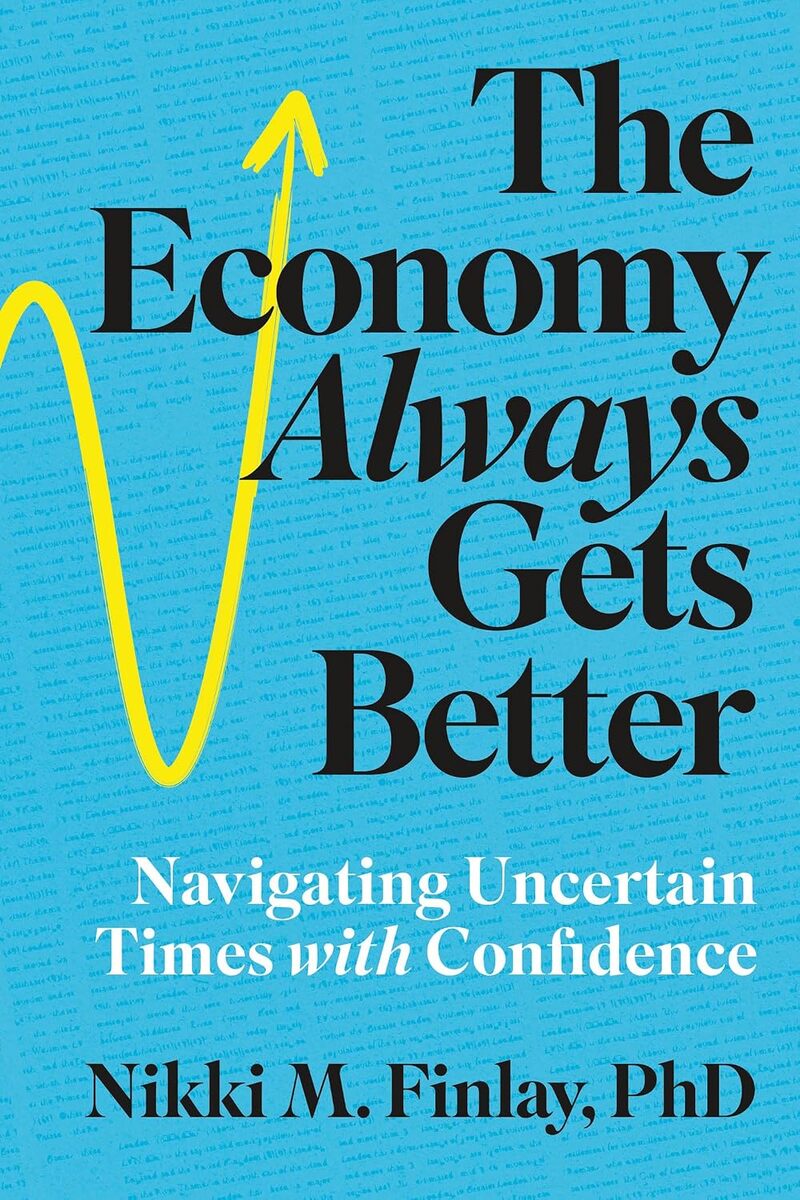
What Is The Economy Always Gets Better About?
At its core, The Economy Always Gets Better is an introduction to economics for people who may have forgotten what they learned in school—or never had the opportunity to study economics at all.
Dr. Finlay breaks down economic concepts using personal stories, metaphors, visual representations, and statistical information. The goal isn’t simply to define economic terminology. It’s to help readers develop a better understanding of what is happening around them.
That can be particularly useful when economic news becomes overwhelming.
When headlines focus on rising prices, economic downturns, tariffs, employment, or changes in GDP, it can be difficult to determine what those developments actually mean for ordinary people. Having a basic understanding of economic principles can make those headlines much less intimidating.
Making Economics Less Intimidating
One of the most appealing aspects of this book is its focus on accessibility.
Economics is often presented as a subject filled with graphs, statistics, formulas, and technical language. While those things have their place, they can make the subject seem inaccessible to someone who isn’t an economist.
Finlay takes a different approach by using explanations and examples intended for a general audience.
The use of metaphors and personal stories is especially helpful because abstract concepts can become much easier to understand when they’re connected to familiar situations.
Instead of simply memorizing definitions, readers can begin to understand how different pieces of the economy fit together.
Why Understanding Economics Matters
You don’t have to be an investor, business owner, or economics student to benefit from understanding the economy.
Economic conditions influence many aspects of everyday life. Prices at the grocery store, borrowing costs, employment opportunities, housing, business decisions, and household budgets can all be affected by economic conditions.
That makes financial and economic literacy useful for virtually everyone.
Understanding basic economic terminology can also make it easier to evaluate the information we encounter every day. Rather than automatically accepting every alarming headline—or dismissing economic news because it seems too complicated—we can have the background knowledge necessary to put it into context.
My Review
I think the biggest strength of The Economy Always Gets Better is that it recognizes something important: people shouldn’t need an economics degree to understand the economy.
The book sounds particularly well suited to readers who feel that economic discussions go over their heads. The combination of stories, metaphors, visuals, and statistics offers several different ways to approach the material, which can make complicated ideas easier to absorb.
I also like the practical purpose behind the book. This isn’t simply about learning definitions for the sake of learning them. Understanding terms such as recession, inflation, tariffs, and GDP can help readers feel more confident when following economic news and thinking about how larger economic trends may affect their own lives.
For readers who have always felt intimidated by economics, this could be an approachable starting point.
Rather than making readers feel as though they should already understand everything, Finlay appears to meet readers where they are and build from there.
Who Should Read This Book?
The Economy Always Gets Better could be a good choice for:
- Anyone who wants a basic understanding of economics
- Readers who find economic news confusing
- Adults who haven’t taken an economics class
- People who want to refresh what they learned years ago
- Anyone interested in becoming more financially and economically literate
- Students looking for an accessible introduction to economic concepts
- Readers who want to better understand how economic events affect everyday life
You don’t need an extensive background in business or finance to appreciate the subject matter.
Final Thoughts
Economic news can sometimes sound frightening, confusing, or unnecessarily complicated. But understanding the basic concepts behind those headlines can make them much easier to navigate.
That’s what makes The Economy Always Gets Better an interesting book for the everyday reader. Dr. Nikki Finlay takes a subject that can seem intimidating and approaches it with the goal of making it understandable and useful.
If you’ve ever heard a discussion about inflation, recession, tariffs, or GDP and thought, I wish someone would just explain what this means, this book may be exactly the kind of introduction you’ve been looking for.
Knowledge can make uncertainty feel a little less overwhelming, and gaining a better understanding of the economy is one way to become a more informed and confident reader of the world around you.

Ellen is a serial entrepreneur who owns 9 profitable blogs, two printable stores, an online vintage jewelry business, and a variety of other work at home endeavors. She shares tips for working at home successfully.
Thanks for your kind and thoughtful review, Ellen.
You are very welcome!