Last Updated on March 1, 2026 by Ellen
In an era defined by sustainability pledges, ESG frameworks, and bold corporate commitments to regeneration, a critical question remains: why do so many of these efforts fail despite good intentions and significant investment?
Posts may be sponsored. This post contains affiliate links, which means I will make a commission at no extra cost to you should you click through and make a purchase. As an Amazon Associate I earn from qualifying purchases.
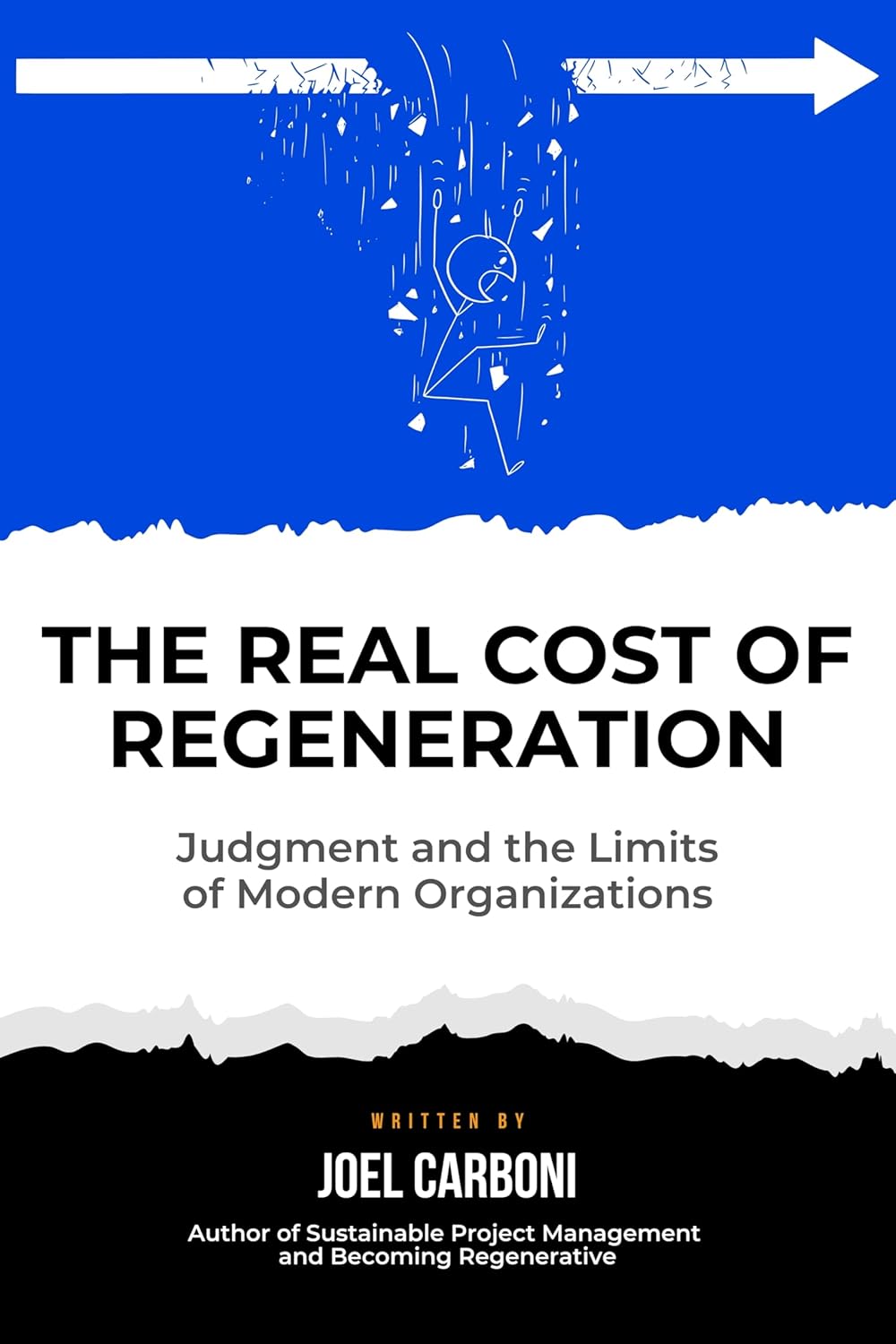
The Real Cost of Regeneration
In *The Real Cost of Regeneration: Judgment and the Limits of Modern Organizations* by Joel Carboni, readers are invited into a rigorous and unflinching examination of the structural forces that quietly undermine ethical leadership long before visible harm occurs. This is not a book about motivation. It is a book about design, power, and the systems that shape decision-making in modern institutions.
Most leadership literature suggests that failure stems from weak values, poor communication, or a lack of courage at the top. Carboni challenges this assumption directly. Organizations, he argues, often fail not because leaders lack integrity, but because the systems in which they operate narrow judgment long before leaders are aware of the consequences.
The book presents a systems thinking analysis of corporate governance and organizational design under pressure. It explores how speed becomes more than an operational preference; it becomes a structural constraint. When speed is treated as non-negotiable, there is no room for pause, refusal, or reconsideration. Decisions move forward because the system is built to move forward. Judgment becomes compressed. Reflection becomes risk.
Carboni examines how alignment and “professionalism” within leadership teams can replace genuine deliberation. Leaders are rewarded for cohesion, clarity, and confidence. Dissent is often reframed as inefficiency. Over time, alignment narrows the range of acceptable thought, and professionalism becomes a mechanism that disciplines judgment rather than strengthens it.
 Systems That Decide Before People Do
One of the book’s most compelling insights is that in modern organizations, systems often decide before people do. Portfolio management converts strategic intent into obligation. Once initiatives are bundled into growth projections and shareholder expectations, they become commitments that cannot easily be reversed. Even when concerns arise, the structural momentum is already in place.
Risk management and assurance processes, commonly seen as safeguards, are also scrutinized. Carboni argues that these mechanisms frequently function as permission rather than protection. When risks are assessed, documented, and mitigated within acceptable thresholds, the system signals approval to proceed. The presence of a risk process can create a sense of legitimacy, even when deeper ethical concerns remain unresolved.
Formal authority, meanwhile, often arrives too late. By the time issues escalate to boards or executive oversight, the organization may already be locked into irreversible paths. Accountability appears to exist, but structurally, the most consequential decisions have already been made.
The Hidden Burden on Teams
Another powerful theme in The Real Cost of Regeneration is how teams absorb harm that systems refuse to hold. When outcomes fall short of sustainability promises or ethical aspirations, responsibility is frequently individualized. Professionals are asked to work harder, align better, or communicate more clearly. Yet the underlying design constraints remain untouched.
This dynamic is particularly relevant for sustainability professionals and ESG leaders working beyond compliance. They are tasked with integrating regenerative practices into systems optimized for speed, growth, and risk-managed expansion. The tension is structural, not personal. Carboni makes clear that without altering the system itself, regeneration becomes performative rather than transformative.
What Regeneration Actually Costs
Perhaps the most challenging argument in the book is that regeneration has a real cost—one that modern organizations are rarely willing to pay. True regenerative leadership may require giving up speed, optionality, deniability, and certain forms of power and growth. It may require redesigning governance structures to allow for pause and refusal. It may demand transparency that reduces flexibility and increases accountability.
These are not minor adjustments. They are structural shifts. Carboni does not offer simplified frameworks or inspirational checklists. Instead, he asks readers to confront the limits of modern organizational design and consider what would genuinely need to change for sustainable business and ethical governance to move beyond rhetoric.
Who Should Read This Book
This book is written for board members, executives, senior leaders, sustainability professionals, governance experts, and system designers who are serious about ESG beyond compliance. It is for those who sense that something deeper is constraining progress but have struggled to articulate what it is.
If you are looking for strategies to motivate teams or optimize performance metrics, this book is not for you. If you want to understand how well-run organizations can still produce harm—and why regeneration requires more than commitment statements—this is essential reading.
[amazon box =”B0GL9MWX74″]
Conclusion
The Real Cost of Regeneration is a disciplined, unsentimental examination of how modern systems shape judgment. It challenges comforting narratives and replaces them with structural clarity. By naming the limits embedded in contemporary organizational design, Joel Carboni opens a conversation that most leadership literature avoids.
If you are ready to move beyond surface explanations and confront the real structural barriers to regenerative leadership, add *The Real Cost of Regeneration: Judgment and the Limits of Modern Organizations* to your reading list today. Engage with the hard questions, examine the systems you operate within, and join the deeper conversation about what regeneration truly requires.

Ellen is a serial entrepreneur who owns 9 profitable blogs, two printable stores, an online vintage jewelry business, and a variety of other work at home endeavors. She shares tips for working at home successfully.