Last Updated on September 16, 2026 by Ellen
The holiday season can be one of the busiest times of year for bloggers. People are searching for recipes, gift ideas, crafts, decorating inspiration, travel tips, ways to save money, and solutions to dozens of holiday problems.
Posts may be sponsored. This post contains affiliate links, which means I will make a commission at no extra cost to you should you click through and make a purchase. As an Amazon Associate I earn from qualifying purchases.
But if you wait until the holidays arrive to get your blog ready, you may be starting too late.
Preparing your blog for holiday traffic ahead of time gives search engines time to find your updated content and gives you time to promote your best posts on Pinterest, social media, and through your email list.
You don’t have to spend weeks overhauling your entire website. Start with the content that has the best chance of bringing you traffic or making you money.
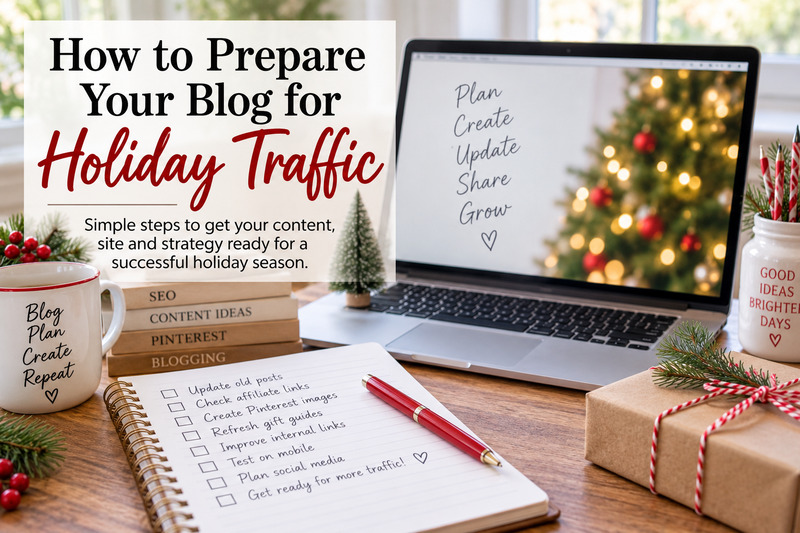
Start Preparing for Holiday Blog Traffic Early
One of the biggest mistakes bloggers make is waiting until November or December to think about holiday content.
If you have Christmas recipes, gift guides, holiday crafts, Thanksgiving ideas, or other seasonal posts already published, start reviewing them well before their peak season.
Search engines need time to crawl changes, and Pinterest content can also benefit from being available before people start actively planning for the holiday.
This doesn’t mean you need to start talking about Christmas in July to your regular readers. You can work behind the scenes updating and optimizing content before you begin heavily promoting it.
Find Your Best Holiday Content
Before writing a dozen new articles, look at what you already have.
Check your analytics and Google Search Console to identify seasonal posts that have received traffic in previous years.
Pay particular attention to articles that:
- Received holiday traffic in previous years
- Already rank for relevant search terms
- Receive impressions but have a low click-through rate
- Earn well from display advertising
- Include affiliate opportunities
- Have performed well on Pinterest
- Cover topics people are likely to search for again this year
An older article that already has search history can sometimes be a better use of your time than starting from zero with another post.
Update Older Holiday Blog Posts
Once you’ve identified your strongest seasonal content, read through each article as though you were a visitor.
Look for outdated information, broken links, discontinued products, old photographs, missing instructions, or sections that no longer answer the reader’s question adequately.
You don’t necessarily need to rewrite the entire article.
You might simply improve the introduction, answer an additional question, update a product recommendation, add a better photograph, improve headings, or make the article easier to scan.
Don’t add words just to make an article longer. The goal should be to make the page more useful.
Improve Your Internal Links
Internal linking is an easy holiday-preparation task that bloggers sometimes overlook.
If you have an important Christmas cookie recipe, for example, look for other relevant baking articles that could naturally link to it. A holiday gift guide might be linked from related shopping or gift articles.
This helps readers discover more of your content and helps search engines understand how your pages relate to one another. Adding relevant internal links to important holiday pages ahead of the season is also a commonly recommended holiday SEO tactic. (Ahrefs)
Don’t limit yourself to adding links from holiday articles. Look for older evergreen posts that can send readers to your seasonal content as well.
Check Your Affiliate Links
Holiday traffic isn’t very valuable if the links that are supposed to make you money no longer work.
Check affiliate-heavy seasonal articles for:
- Broken links
- Products that are no longer available
- Links pointing to the wrong product
- Missing affiliate links
- Recommendations that are no longer relevant
- Places where an affiliate recommendation would genuinely help the reader
Don’t turn every paragraph into a sales pitch. A few highly relevant recommendations are often more useful than filling an article with products simply because you can earn a commission.
And, of course, make sure your affiliate disclosures are current and clearly displayed.
Review Your Highest-Earning Pages
Traffic isn’t the only number that matters.
If you use an ad network, look at your revenue and RPM data from previous seasonal periods. You may discover that some articles make considerably more money per visitor than others.
Those are articles worth paying attention to.
For example, suppose one holiday article receives 1,000 visits with a very low RPM while another receives only 500 visits but earns significantly more per visitor. Increasing traffic to the second article may ultimately be more valuable.
This is one reason bloggers shouldn’t automatically spend all their time promoting the post with the highest pageviews.

Prepare Your Pinterest Content
If Pinterest sends traffic to your blog, don’t wait until the week before Christmas to create holiday Pins.
Review your analytics to see which seasonal articles have historically received outbound clicks and saves. Then create fresh Pins for the strongest opportunities.
Use clear titles that tell people exactly what they’ll find when they click.
Instead of:
Christmas Ideas
try something specific like:
25 Easy Homemade Christmas Gifts
or:
Easy Christmas Cookies You Can Make Ahead
Specific Pins give people a reason to click.
You don’t need twenty new Pins for every article. Start with your strongest content and create genuinely different designs for the posts with the most potential.
Make Sure Your Site Works on Mobile
A beautiful holiday article isn’t much help if visitors have trouble reading it.
Open several important pages on your phone and actually use them.
Can you read the text comfortably? Are photographs loading correctly? Can you close pop-ups? Are buttons easy to tap? Does anything cover the recipe, instructions, or other important information?
You don’t need to become a technical expert. Simply experiencing your blog as a reader can uncover problems you don’t notice while working on a desktop computer.
Check Your Site Speed
Holiday traffic isn’t the time to discover that enormous images or unnecessary plugins are slowing down your site.
You don’t need to obsess over achieving a perfect speed score. Instead, look for obvious problems.
Compress unnecessarily large images, remove plugins you no longer use, update the plugins and themes you do use, and make sure your caching and other performance tools are functioning correctly.
Be especially careful about making major technical changes immediately before your busiest season. This is generally a better time for maintenance than an unnecessary site redesign.
Build Your Email List Before the Holidays
Don’t think of your email list only as a place to promote new blog posts.
It gives you a way to bring existing readers back to your site when your most valuable seasonal content becomes relevant.
Make sure your signup forms work and consider whether you have an existing freebie that naturally relates to your holiday audience.
Then, when the season arrives, send subscribers genuinely useful content rather than emailing them every time you publish something.
A helpful email featuring several related holiday articles can generate traffic to multiple pages from a single newsletter.
Update Your Most Important Gift Guides
If you publish gift guides, review them before holiday shopping begins.
Check prices where appropriate, remove unavailable products, replace outdated recommendations, and make sure you’re still comfortable recommending everything included.
If the URL is evergreen, avoid creating a brand-new version every year simply to change the year in the title. An established page can be updated while keeping the same URL.
You can also look for opportunities to improve older gift guides with better organization. Sections such as “Gifts Under $25,” “Gifts for Gardeners,” or “Last-Minute Gifts” may make a long guide easier to use.
Think About What People Need Before the Holiday
Holiday traffic isn’t limited to Christmas Day or even December.
People search for solutions throughout the entire season.
Depending on your niche, that could include:
- Thanksgiving recipes
- Christmas budgeting
- Holiday cleaning
- Homemade gifts
- Gift guides
- Holiday outfits
- Party planning
- Christmas crafts
- Winter activities
- Leftover recipes
- New Year’s ideas
Look at your existing content and identify where you already have useful answers.
You may discover that you need very little new content. You simply need to make your existing content easier to find.
Don’t Forget What Happens After Christmas
Holiday traffic doesn’t stop abruptly on December 25.
Readers may immediately start searching for ways to organize their homes, use leftovers, return unwanted gifts, lose holiday weight, save money, plan for the new year, or entertain children during school vacation.
Look for natural transitions between your holiday content and the evergreen content you want people to visit next.
This can extend the usefulness of seasonal traffic instead of letting it disappear as soon as the holiday ends.
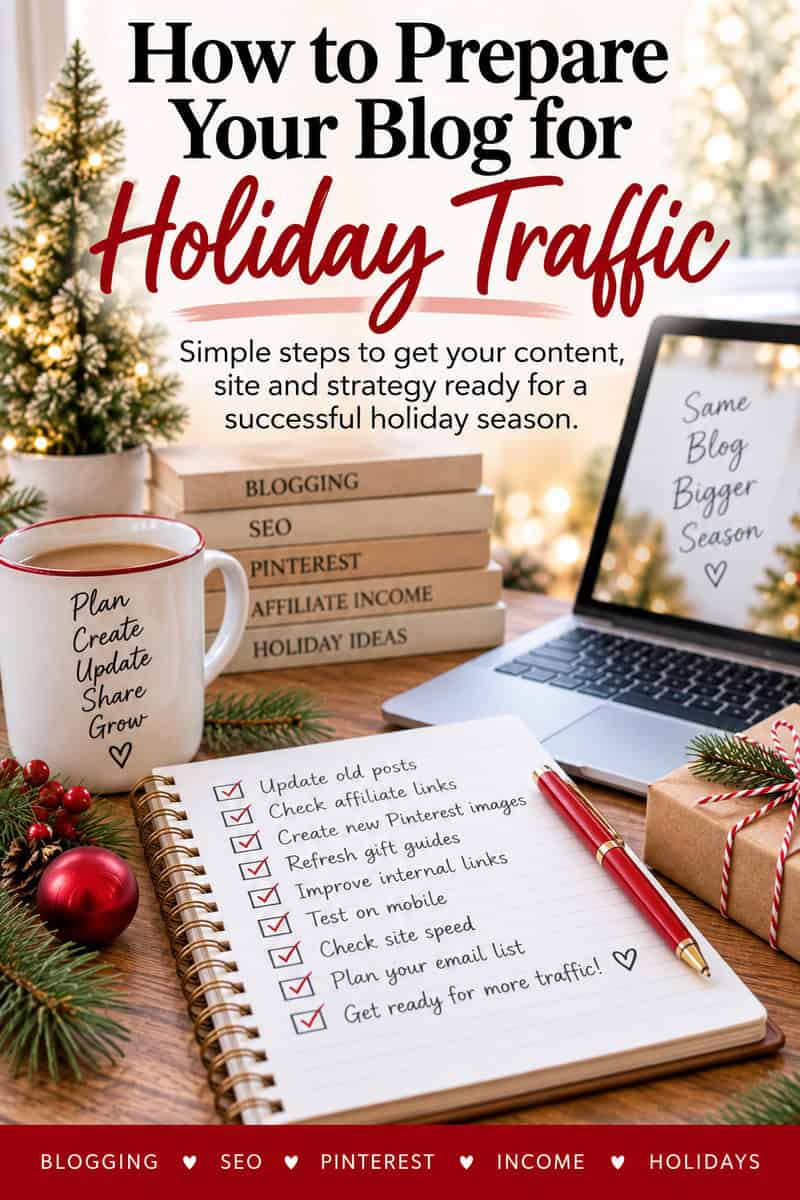
Create a Simple Holiday Blog Checklist
Preparing for holiday traffic doesn’t need to become another overwhelming project.
Start with a short list:
- Identify your best seasonal posts.
- Update outdated information.
- Check affiliate links.
- Add relevant internal links.
- Review your highest-earning seasonal pages.
- Create fresh Pinterest images for proven content.
- Test important pages on mobile.
- Check site performance.
- Make sure your email signup works.
- Plan when you’ll promote your strongest articles.
Then work through the list a little at a time.
Work Smarter With the Content You Already Have
It’s easy to assume that getting more blog traffic means constantly publishing more content.
That’s not always the best use of your time.
Your blog may already contain articles that have search history, Pinterest potential, affiliate links, and advertising revenue attached to them. Refreshing those assets and putting them back in front of readers can be just as important as publishing something new.
That’s particularly true during the holiday season, when you may already have years of seasonal content sitting in your archives.
Start with the pages that have already shown signs of success. Improve them, connect them to related content, and promote them when they’re most relevant.
You don’t need to prepare every page on your blog for the holidays.
Prepare the pages that have the best chance of bringing you traffic and income.

Ellen is a serial entrepreneur who owns 9 profitable blogs, two printable stores, an online vintage jewelry business, and a variety of other work at home endeavors. She shares tips for working at home successfully.